









The 2026 State of Payer Enrollment and Medical Credentialing for Executive Leadership
Healthcare organizations are entering the new year with tightening margins, unstable staffing, and widening gaps between modern and legacy workflows. Learn the pressures shaping the key trends every executive should be tracking.
Download the research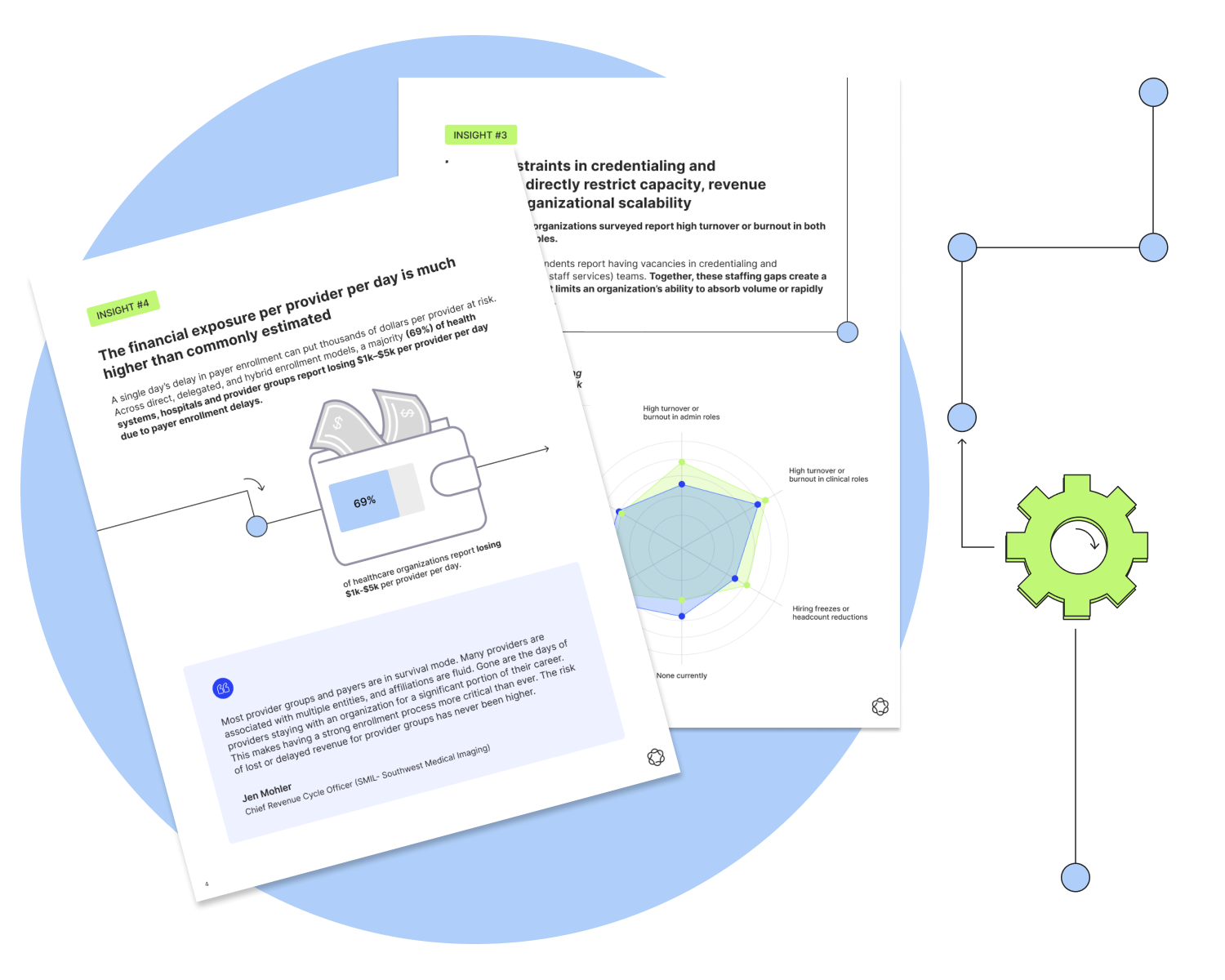
“I feel like payer enrollment needs to have more automated AI integration. I work for a large hospital and we are constantly opening new locations and hiring new providers, but not hiring any more employees for enrollment coordinators and credentialing coordinators. Manually entering every application is way too time consuming.”
 Jessica B.Enrollment Coordinator at Cincinnati Children’s Hospital Medical Center
Where operational and financial performance breaks down: 2026’s most overlooked areas
.svg)
Where are AI investments being made across the healthcare ecosystem?
Most AI investment still targets clinical documentation, leaving credentialing and enrollment with only 12% of spend. And with 16% of organizations not investing in AI at all, compliance concerns and integration hurdles continue to slow meaningful progress.
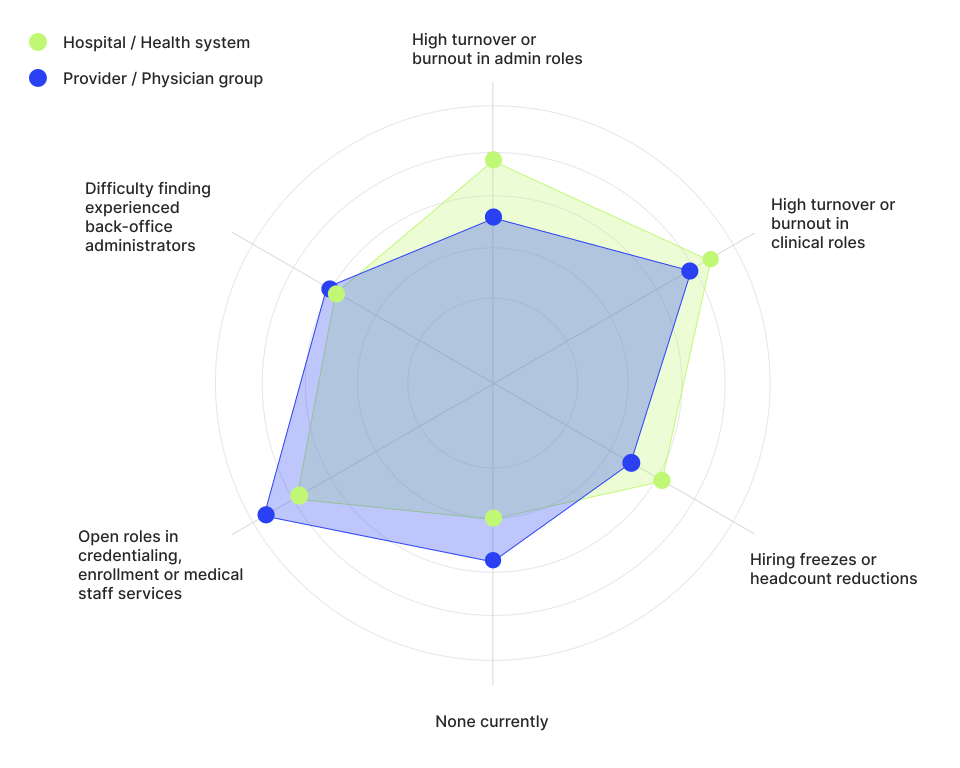
How are staffing shortages limiting throughput for healthcare organizations?
38% of organizations report high turnover or burnout across admin and clinical teams, and another 20% have vacancies in credentialing and enrollment roles. These gaps are making it difficult to absorb demand, reduce backlogs or onboard new providers quickly.
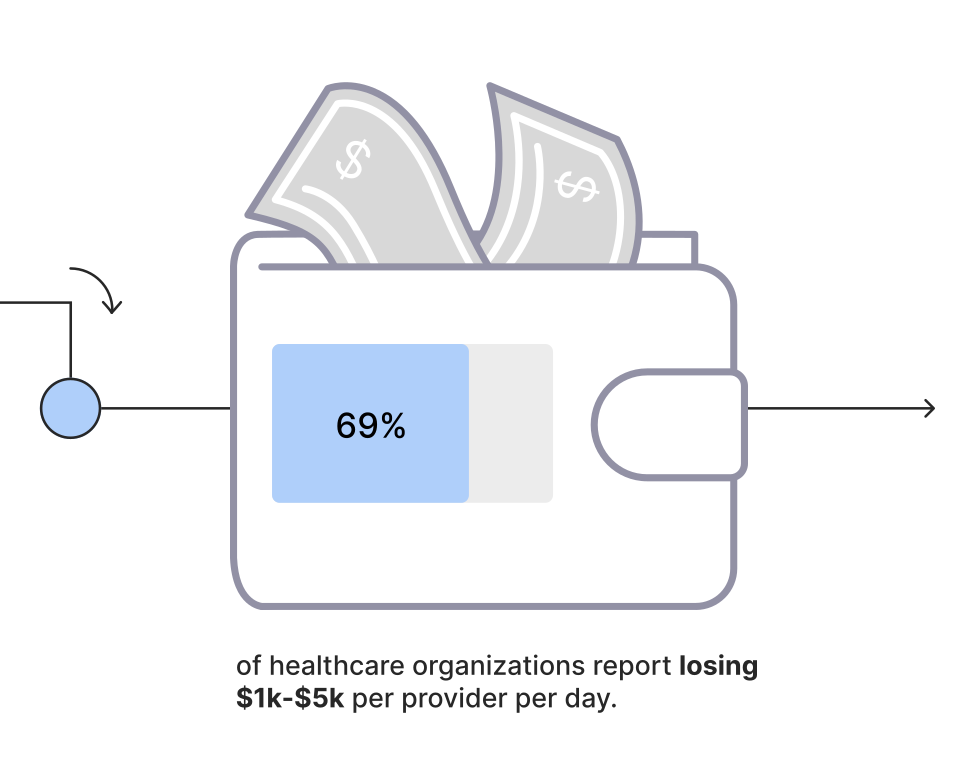
How much revenue is at risk for each day of payer enrollment delay?
The financial exposure is far higher than many leaders assume. 69% of organizations lose $1k–$5k per provider per day due to payer enrollment delays, across direct, delegated, and hybrid models — turning even brief bottlenecks into significant revenue risk.
Get the full report
Download the research for the complete set of 2026 benchmarks and trends.