









The 2026 State of Payer Enrollment and Medical Credentialing
See the key healthcare trends and learn how financial, operations, and executive leaders across health systems, provider groups, and payers are streamlining workflows, boosting revenue, and improving data accuracy to power faster, more efficient provider network management.
View the reports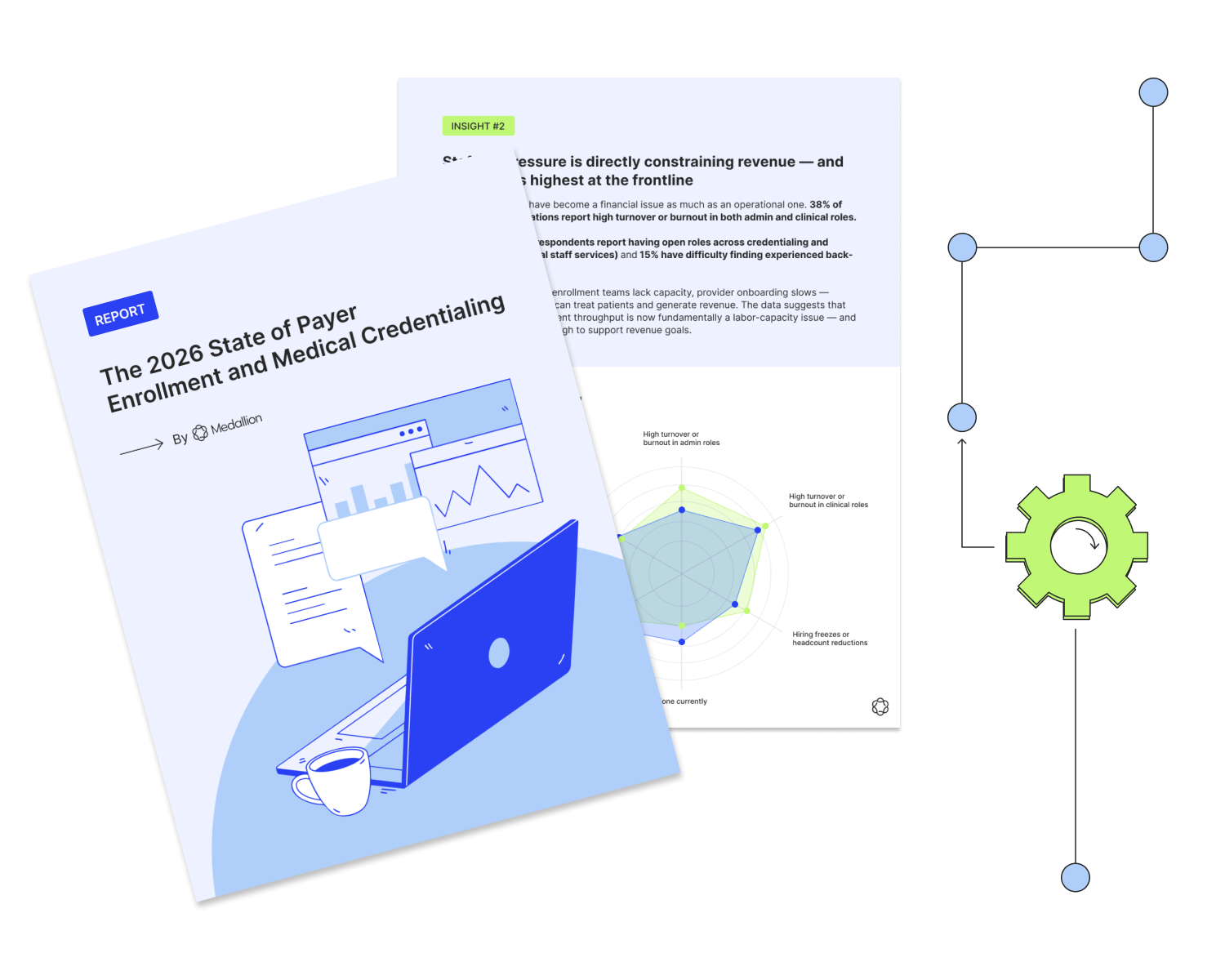
“I feel like payer enrollment needs to have more automated AI integration. I work for a large hospital and we are constantly opening new locations and hiring new providers, but not hiring any more employees for enrollment coordinators and credentialing coordinators. Manually entering every application is way too time consuming.”
 Jessica B.Enrollment Coordinator at Cincinnati Children’s Hospital Medical Center
The forces quietly undermining operational and financial performance
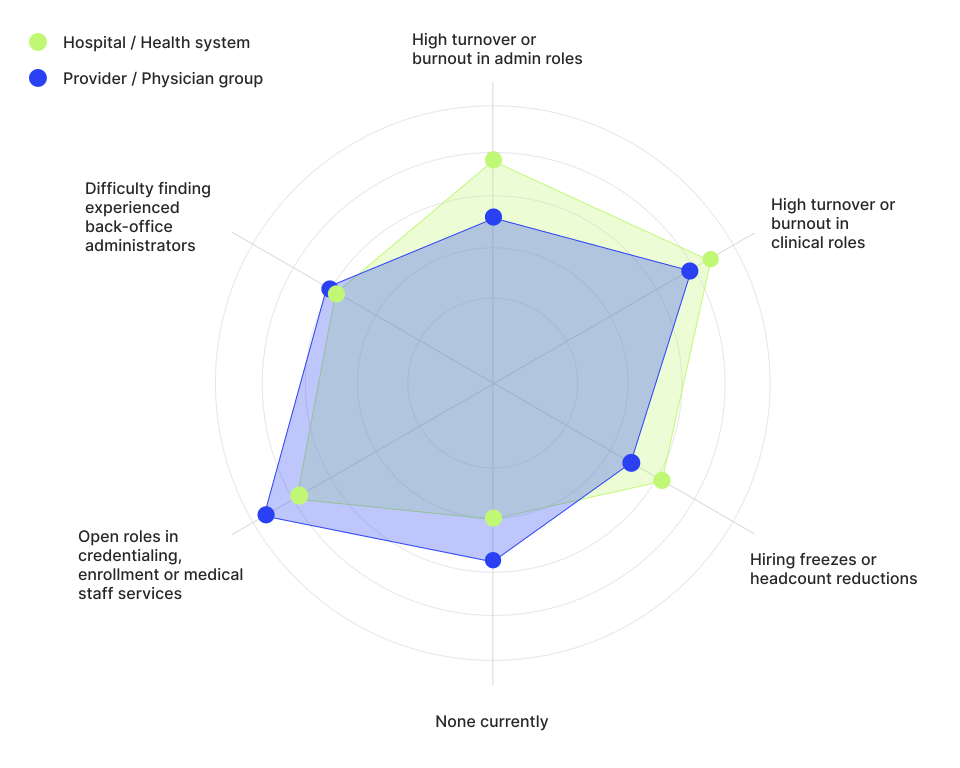
How is staffing pressure directly impacting revenue for healthcare organizations?
With 38% of organizations reporting high turnover or burnout, shrinking clinical and admin teams are making manual credentialing and enrollment harder to sustain — driving delays and directly constraining revenue.

How much do credentialing delays cost hospitals annually?
1 in 5 hospitals report losing more than $1M annually due to credentialing delays — an increasingly measurable and pervasive source of revenue pain that strains budgets and slows access to care.
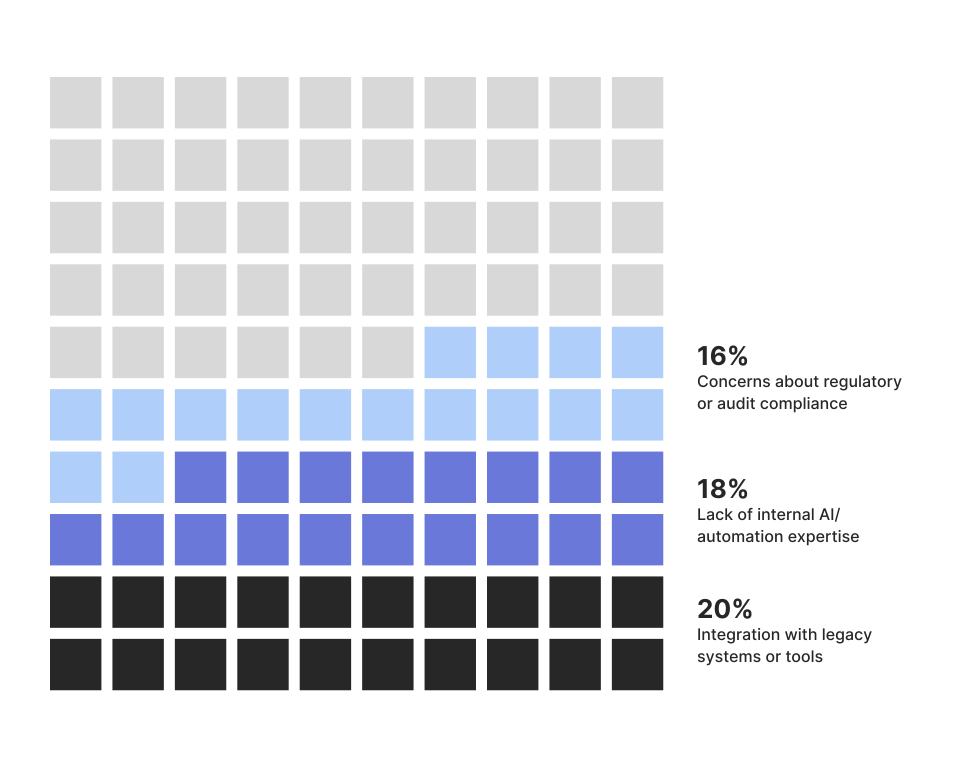
What’s slowing AI adoption for payers?
Payers cite legacy system integration (20%) and limited AI expertise (18%) as top blockers. It’s a readiness gap, not a value gap — making “ready-to-run” solutions the fastest path to adoption.
.svg)
Why isn’t AI reducing credentialing and enrollment delays yet?
Most AI investment still targets clinical documentation, leaving credentialing and enrollment with only 12% of spend. And with 16% of organizations not investing in AI at all, compliance concerns and integration hurdles continue to slow meaningful progress.
Explore the insights by industry and role

Operations leaders
Explore automation benchmarks, turnaround times, and how top-performing teams are streamlining provider onboarding at scale.
Get the Summary
Executive leaders
See how your peers are rethinking workforce strategy, compliance, and digital transformation to future-proof provider operations.
Get the Summary
Financial leaders
Understand how credentialing and enrollment bottlenecks are affecting reimbursement timelines, and what leading orgs are doing to unlock faster revenue.
Get the Summary
Health systems
Learn how leading health systems are modernizing credentialing and enrollment to reduce risk and increase speed across departments and care sites.
Get the Insights
Provider groups
Get insights on payer turnaround times, delegated agreements, and credentialing workflows that help you get providers billable faster.
Get the Insights
Health plans
Explore how payers are improving directory accuracy, reducing errors, and working with partners to modernize credentialing from the ground up.
Get the Insights